Bengaluru Krishi Mela 2026 opens with drought-tolerant ragi, maize and amaranth varieties
With 226 of Karnataka's 240 taluks hit by drought, the University of Agricultural Sciences used its annual farm fair to push water-saving methods and showcase three new seeds.
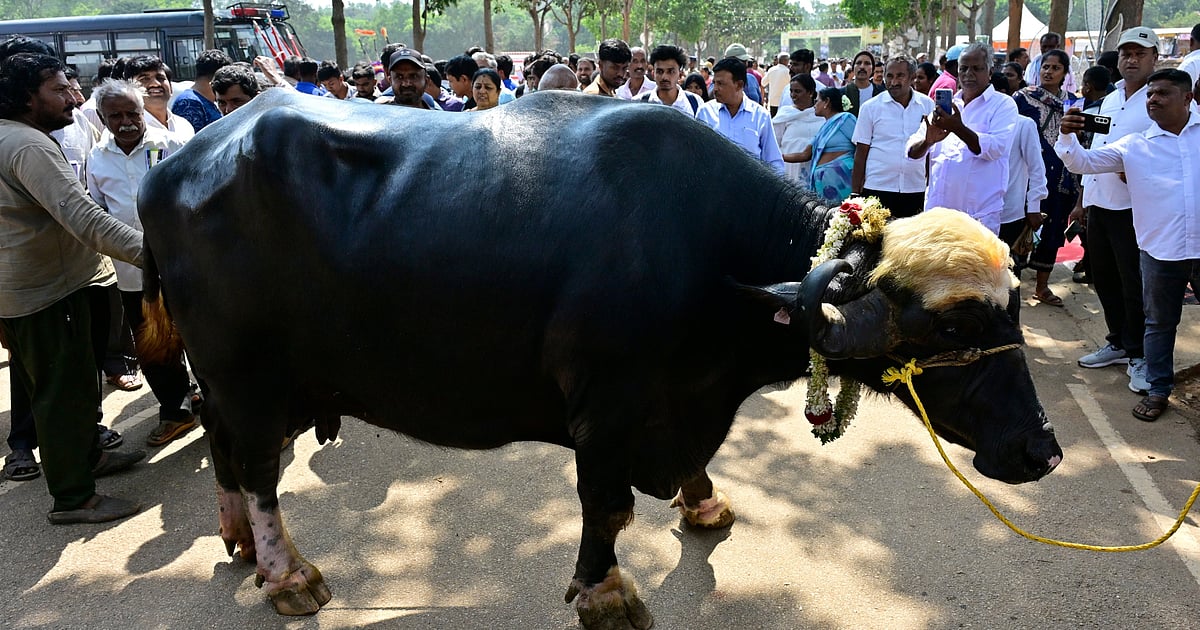
Bengaluru's University of Agricultural Sciences (UAS) opened its three-day Krishi Mela 2026 at the GKVK campus, using the annual farm fair to put drought-proofing front and centre. The university unveiled three new crop varieties as Karnataka struggles with a heavy rainfall shortfall.
The new releases are GPU 101, a medium-duration finger millet (ragi) bred to tolerate dry spells; KBGA 18, a high-protein amaranth (dantu); and MH 2045, a hybrid maize noted for its yield potential and its use as fodder. UAS, now in its 61st year, says it has developed more than 340 crop varieties to date.
Agriculture Minister P M Narendra Swamy told the gathering that 226 of the state's 240 taluks are under drought conditions, with crop losses reported in several regions. He said the government has decided on initial assistance of Rs 5,000 for each affected farmer, and that 37.5 lakh farmers signed up for crop insurance in the 2026 kharif season.
His advice leaned on water management: dryland farming, rainwater harvesting, farm ponds, reviving lakes and micro-irrigation. He also encouraged farmers to diversify into horticulture and allied activities, and to adopt digital tools, artificial intelligence and drones.
Two proposed schemes were flagged. 'Raitha Chaitanya' would deliver soil health information and early crop-disease alerts through mobile apps, while 'Negilu Yogi' aims to help small farmers with ploughing, sowing and harvesting services.
Union Minister of State Shobha Karandlaje called for tighter implementation of crop insurance and timely compensation for farmers hit by drought and floods. She also stressed value addition, food processing, cold storage and direct market links to cut post-harvest losses.
Beyond the speeches, the fair has about 100 technology stalls, plus crowd-pullers such as an insect wonderland, a honey garden and a forest-themed display, along with field demonstrations. Six state-level awards, district honours and recognition for young and women farmers were presented, and the university released publications on farm technologies and farmer success stories.