Bittan Devi, a Tewa village pradhan with eighth-grade schooling, builds a model gram panch
A two-term village head in Kaushambi has combined a community complex, biogas, cow welfare and a space lab under one development plan for Tewa.
In Tewa gram panchayat in Kaushambi district, close to Prayagraj, 55-year-old Bittan Devi has spent about a decade reshaping a village that was once seen as left behind. She has eighth-grade schooling, first won the gram pradhan post in 2015, and has served two consecutive terms. Her development record has drawn attention from the state government, which recognised her work with an incentive award.
The core of her approach is a community complex that puts most of the panchayat's essential services in one place. The building houses the panchayat office, a Resource Recovery Centre, a model ration shop, a cattle shelter, a cooperative society and a cremation or burial ground. It also offers 16 types of services that link residents to state welfare schemes. Her son, Avnish Tripathi, who acted as her representative, said priorities were set through public participation rather than handed down from above.
The cow shelter is where the model shows its energy and economic side. What started as a home for aged and abandoned cows now shelters 177 animals and supports a biogas plant installed in 2025 under Phase II of the Swachh Bharat Mission. The plant, rated at 45 cubic metres and built at a cost of about Rs 24 lakh, runs on dung from the shelter. Its electricity lights the premises, runs submersible pumps and drives fodder-cutting machines. Leftover slurry goes to local farmers as fertiliser, which officials say is helping crop yields. The shelter also gives nutritional support to malnourished children in the panchayat, and 18 cows have been donated to families of those children so far.
Those gains sit within a wider set of changes. Vinod Ram Tripathi, chief development officer of Kaushambi, said several panchayats in the district were exploring alternative energy, and Tewa, in Manjhanpur block, was among the first to generate electricity from a biogas plant at a shelter. The village also reports that 60 per cent of its households now have solar lighting. A Niti Aayog team that inspected the project commended the work. Devi received Rs 35 lakh under the Chief Minister's Incentive Award, and the money has since gone into village development.
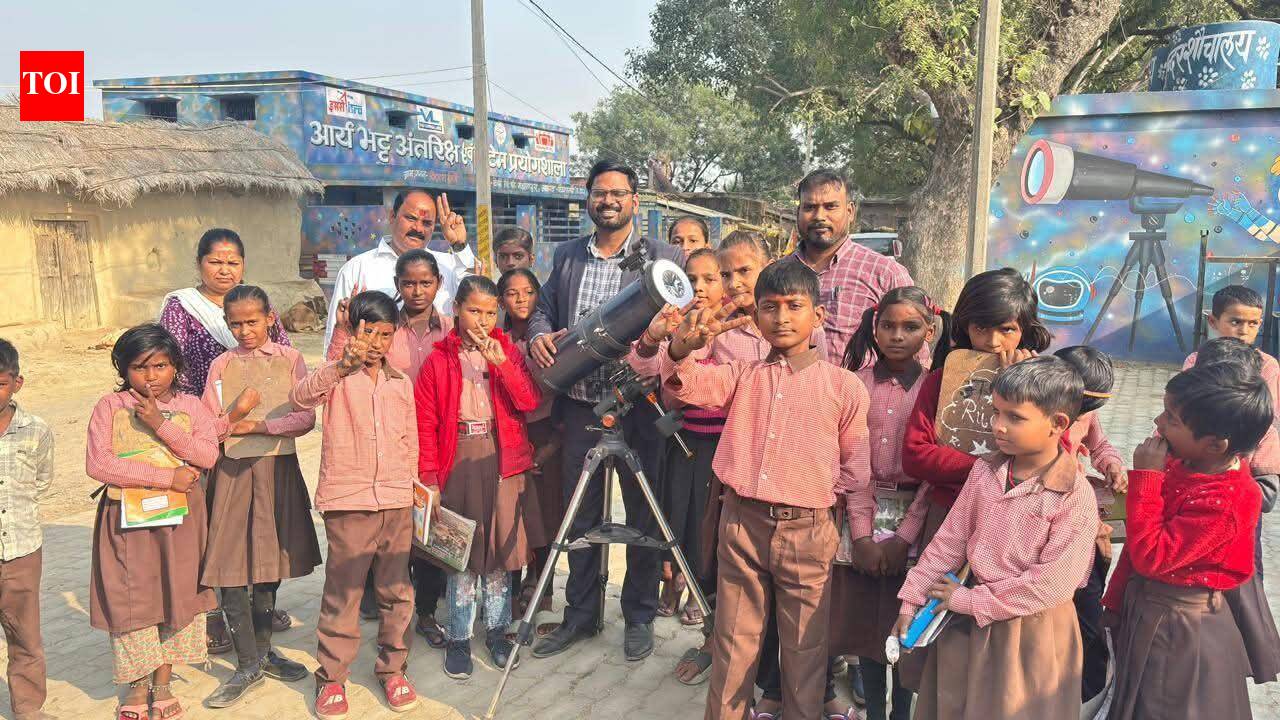
The panchayat is also part of a science outreach effort. The Space Applications Centre of Isro, based in Ahmedabad, runs a Village Scientist Programme that set up space laboratories in government schools across 15 districts of Uttar Pradesh, with backing from chief minister Yogi Adityanath. Tewa hosts the Aryabhata Space and STEM Laboratory, built at a cost of Rs 35 lakh, which invites children from rural government schools to visit and explore space research.
Why it matters is less about one village than about what a local government can do with existing schemes when decisions are made with residents. Tewa's model draws together sanitation, energy, animal welfare, nutrition and education, and the funding comes largely from programmes already available to many panchayats. Whether the approach can be repeated will depend on maintaining the shelter, the biogas plant and the lab over time, and on other village heads adapting the model to local conditions. For now, Tewa offers a concrete example of a rural council using public participation and government schemes to solve its own problems.
Read the original report at Times of India.