David Abraham, Hindi cinema's 'Uncle', also served Indian weightlifting
Best known for his avuncular roles in Hrishikesh Mukherjee's films, actor David Abraham Cheulkar held senior posts in Indian weightlifting and served on the Olympic body.
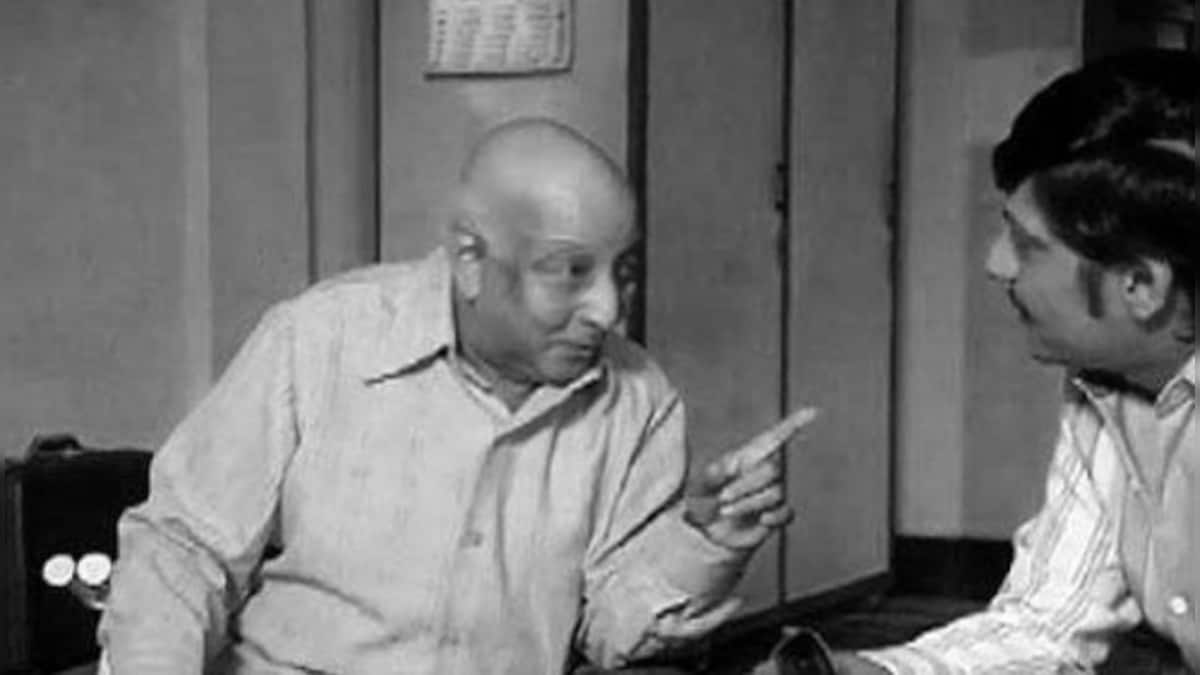
David Abraham Cheulkar, the character actor audiences of 1970s Hindi cinema knew simply as 'Uncle' David, led a second career in sports administration that rarely features in accounts of his film work. According to a retrospective by Firstpost, he was president of the Maharashtra Weightlifting Federation, vice president of the Indian Weightlifting Federation, and served on the Olympic Committee as a representative of India.
His screen identity was fixed by a long association with Hrishikesh Mukherjee, in whose films he was a regular presence as a gentle elderly figure. The retrospective notes that his sporting involvement extends a wider, little-discussed tradition among Indian film personalities. It cites the singer Manna Dey as a wrestler, and Janki Das as a cyclist who set records and, by the article's account, sat on the International Olympic Committee at the 1936 Berlin Games.
The piece also traces a route to the screen that was far from direct. Cheulkar's father died when he was a toddler, and he was raised by his mother, Dinah, and his elder sibling, Shalome. He developed an interest in theatre at St. Joseph's School and Wilson College, where, because he knew French well, he took lead roles in French-language plays staged in a neighbour's garden.
He graduated with a B.A. in 1930, but the degree did not secure employment. He spent roughly six years searching for work and studied law at the Government Law School during that period. By his own later account, his first letter of appointment came on January 15, 1937, offering a character role in Zambo, The Ape Man, produced and directed by Mohan Bhavnani. One of the conditions was that he shave off his pencil moustache, a style modelled on the Hollywood actor Errol Flynn.
At 28, he played an elderly professor. Over the next three years, under Bhavnani's guidance, he worked as an assistant director, production manager, clapper boy, continuity clerk and telephone operator, in addition to acting, all on a fixed studio salary. He was dismissed on February 1, 1940, according to his own recollection. He then completed his law studies and became a B.A., LL.B., though work remained elusive.
When he returned to the studios, the industry had moved from salaried contracts to a star-driven system in which leading actors commanded fees. One such star gave him his first major serious role in Boot Polish (1954), in which he played John Chacha, a bootlegger. The retrospective also suggests he may have had some connection to Steven Spielberg's 2005 film Munich, though the excerpt available does not specify what that link was.
The account matters as a corrective to the narrow image of a performer defined by one kind of role. It records a figure who combined a long film career with institutional service to Indian sport, at state, national and Olympic levels. Further detail is available in the original Firstpost feature.