Forest rights plots and the farming plan: why critics call it an agri-trap
A proposal to turn Individual Forest Rights land into oilseed and pulse clusters, based on soil maps, is drawing warnings about debt, wildlife conflict and forest loss.
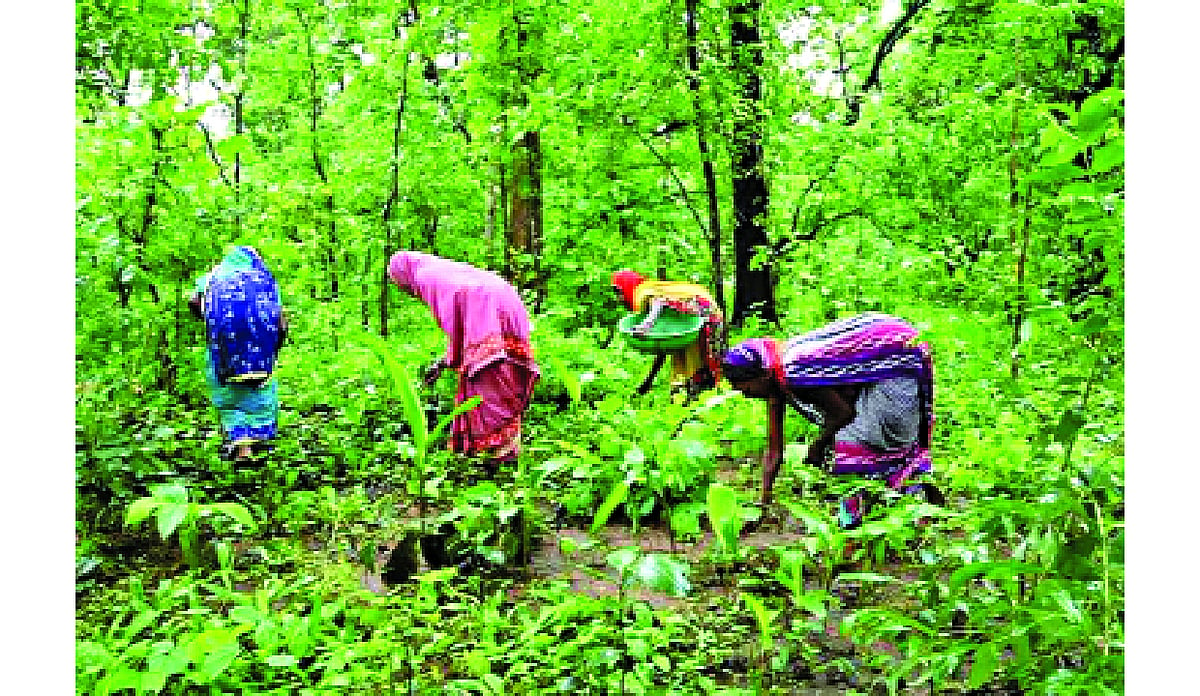
A proposal to convert forest plots held under Individual Forest Rights into oilseed and pulse production clusters, with market links and institutional credit, is facing sharp criticism from analysts who argue it could leave tribal and forest-dwelling families worse off. The idea leans on district-level soil mapping by the Food and Agriculture Organization to identify which forest land is suitable for crops, and it targets plots recognised under the 'self-cultivation' provision of Section 3(1)(a) of the Forest Rights Act, 2006.
The Act was meant to correct a long-standing gap. It recognised the rights of Forest Dwelling Scheduled Tribes and Other Traditional Forest Dwellers who had lived in forests for generations without their claims being recorded. Critics of the farming plan do not dispute that goal. Their concern is the gap between that goal and the land actually granted. Many recognised plots are small and broken into fragments, and they were cultivated for subsistence rather than as commercial holdings.
One figure cited in the critique is a 2013 study of around 36,600 randomly selected cases in Maharashtra, which found that 43 per cent of Individual Forest Rights recognitions averaged about 1.3 acres. Plots of that size, scattered through forest interiors, are hard to serve with irrigation, storage and roads at a reasonable cost. The same argument holds that many of these soils are poorly suited to intensive cultivation, and that earlier waves of encroachment regularisation pushed farming onto land that was never fit for it.
The ecological objections are equally direct. Intensive farming inside forests, the critics say, brings agrochemicals into streams and food webs, and a larger human footprint raises the risk of conflict with elephants, big cats and other wildlife. They point to rising incidents of crop raiding, fatal animal attacks and retaliatory killings in states including Kerala, Karnataka, Maharashtra, Assam, Odisha, Uttarakhand and Himachal Pradesh as evidence of where that path already leads.
The economic risk is what the critique treats as most serious. Farmers working small, low-productivity plots who depend on loans and volatile market prices are exposed to the same pressures that have fed debt cycles and distress in agrarian India, including the farmer suicides concentrated in parts of central India. As soil fertility falls, the argument runs, families may feel pressure to clear adjacent forest to keep yields steady, turning a livelihood programme into a cycle of forest loss and legal exposure.
The debate matters because the Forest Rights Act sits at the intersection of welfare, land rights and conservation, and a farming scheme that ignores ecology could undo the Act's purpose. Readers tracking the policy should watch whether the government treats soil maps as a reason to expand cultivation or as a limit on it. The full analysis, published by The Daily Pioneer, is available at dailypioneer.com/analysis/forest-rights-unviable-soils-and-the-agri-trap.