Yuge Yugeen Bharat Museum Plan Exposes India's Gap Between Scale and Storytelling
As Delhi builds what is billed as the world's largest museum, a museum designer argues that planning processes, not collection size, decide whether such institutions can sustain public curiosity.
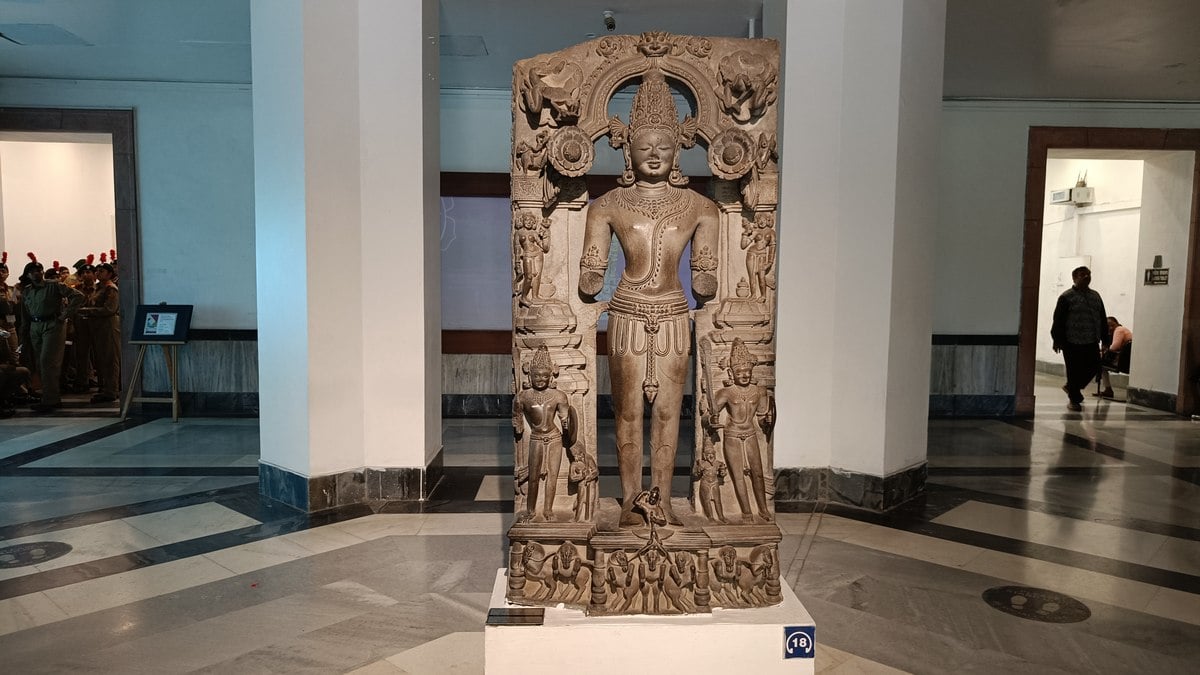
India is preparing to open the Yuge Yugeen Bharat Museum in New Delhi, expected to be the world's largest museum on completion, with more than 80,000 artefacts across 950 rooms and 30 thematic galleries spread over 1,55,000 square metres. An opinion essay published by ThePrint uses that scale as a starting point for a harder question: whether big buildings and big collections translate into museums that people actually learn from.
The author, an architect who has studied many Indian museums and helped design a few, contends that the central weakness is not a shortage of objects. It is a shortage of storytelling. Many significant artefacts, the essay argues, fail to hold visitors because nothing connects them to other items in the collection or to the world they came from.
The policy backdrop is one of expansion. The essay notes that the Union Budget 2026 proposed developing 15 archaeological sites, among them Lothal, Dholavira and Sarnath, into "experiential cultural destinations." It also points to the Ministry of Culture's Museum Grant Scheme, under which projects can receive up to Rs 15 crore for Category 1 museums and Rs 8 crore for modernising an existing Category 2 museum. Money and ambition, in other words, are flowing into the sector.
The proposed fix is procedural. The author wants interpretive planners brought in at the earliest design stage. These specialists catalogue a collection and draft the museum's overarching narrative, along with gallery-level and object-level stories. Curators, conservators and exhibition designers would then work with them so that each artefact is displayed with suitable context. The essay says the absence of this step explains much of the disjointed presentation seen across Indian museums.
The second step is carrying that narrative into architecture and exhibition design: displays, lighting, colour, texture and audio-visual elements. As an example, the author cites the Samrat Samprati Museum of Jain Heritage in Gujarat, where a gallery showing Akbar's farmaan to the Jain monastic leader Heer Suri recreates the Mughal court at Fatehpur Sikri with red sandstone arches and white borders. The aim is to place any visitor, Jain or not, child or adult, inside the setting in which the object makes sense.
The essay also flags physical and language accessibility as a layer missing from many Indian museums, though the excerpt available cuts off before the author explains the practical reasons. That gap matters for accountability: grant schemes and flagship projects are usually judged on construction, collection size and footfall, while interpretive quality and access are harder to measure and easier to defer.
This is an opinion piece, and its claims rest on the author's professional experience rather than visitor data. Even so, it raises a question for policymakers as public funding grows: whether approvals and grants will reward narrative planning and accessibility, or only scale. Read the original essay at ThePrint.