How Shivanasamudra Falls Lit Up Bengaluru's First Electric Streetlights in 1905
A waterfall about 150 km away powered the streetlights that replaced kerosene lamps in Bengaluru in August 1905.
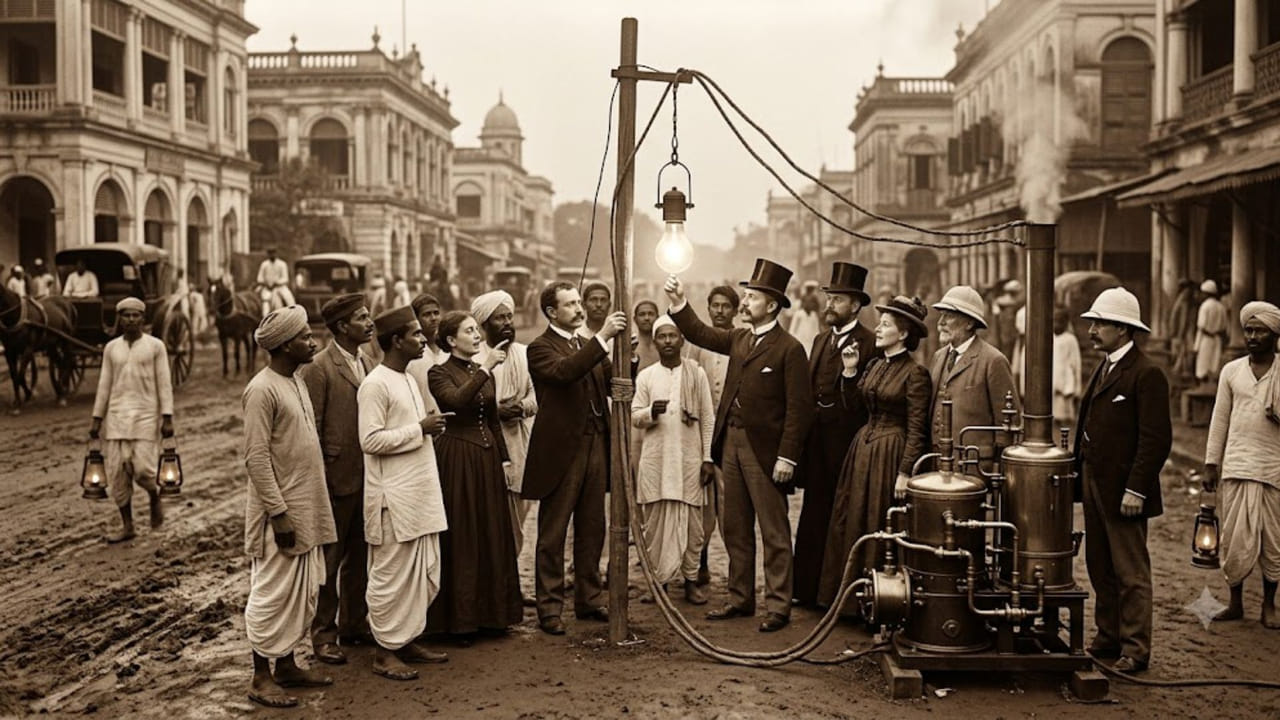
In August 1905, Bengaluru switched on electric streetlights for the first time, ending a long era of kerosene lamps. The power came from the Shivanasamudra Falls on the Cauvery River, a site far outside the city. For a town that now prides itself on tech parks and metro lines, it is a striking start to its modern story.
Before electricity, the job of lighting the streets fell to workers who walked from lamp to lamp each evening. They topped up the fuel, wiped the soot off the glass and lit each flame by hand. It was slow, dirty work, and it did little to make the city safe or pleasant after dark.
The chain of events began at the Kolar Gold Fields (KGF), where mining was booming. Miners went deep underground, and poor lighting made night shifts hard to manage. Engineers looked for a reliable power source and settled on the falls at Shivanasamudra, where flowing water could drive a hydroelectric station. That station was built mainly to run the KGF mines, roughly 150 km away.
As the plant expanded, it produced more electricity than the mines needed. Records of the period show about 2,000 horsepower was available by 1905. That surplus made it possible to think beyond the goldfields, and the transmission line that carried power to KGF ran through Bengaluru, giving the city a direct connection to the grid.
Chief Engineer William McHutchin proposed using the spare power to light the city's streets. The Maharaja of Mysore, Nalwadi Krishnaraja Wadiyar, approved the idea. Work on the transmission and distribution network followed, and within about nine months a line of roughly 57 km was built from Kanakanahalli, near present-day Kanakapura, toward Bengaluru.
The episode matters because it shows how a single infrastructure project could change everyday city life. A hydroelectric plant built for mining became the foundation for urban lighting, and the same grid laid the groundwork for the electrified city that followed. For readers today, it is a reminder that Bengaluru's modern infrastructure has deep roots.
You can read the original report on this history at this Asianet Newsable article.