Front / Artificial Intelligence
MeitY Secretary defends Sarvam's Token Factory, says AI labs need revenue
Secretary Krishnan said there is no contradiction between Sarvam's IndiaAI Mission work and its new commercial platform, and signalled that the mission's next step is to support inference costs.
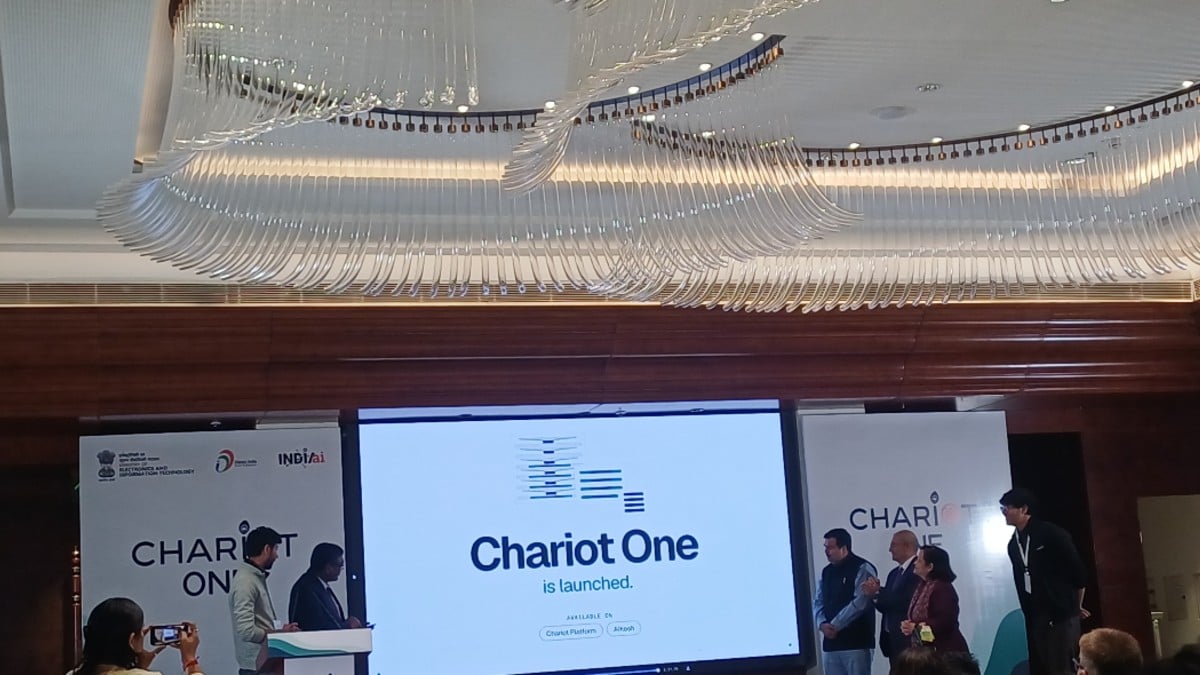
MeitY Secretary Krishnan has said Sarvam did not misuse support from the IndiaAI Mission by launching Token Factory, a commercial platform that sells access to several AI models. He said the government is still backing the startup as it works towards a 1 trillion parameter model.
Sarvam launched Token Factory last week. It is an inference platform that offers multiple models through one API, running on computing infrastructure in India. The list includes Sarvam's own model and open-weight models such as DeepSeek, Kimi, GLM and Google's Gemma. Social media users asked why a company picked to build a sovereign Indian model was selling access to Chinese models.
Sarvam co-founder Pratyush Kumar has said the platform runs on GPUs the company bought itself, without government help. The company has also said its subsidised compute under the mission ended in March 2026. Krishnan said the ministry knew of the plan: Sarvam had told it that it would build a "harness" combining open-source and open-weight models, including its own, to sell AI services to Indian customers. "After all, AI companies also require a revenue model," he said.
Krishnan said other startups have approached the ministry with similar harnesses. He added that the government uses such services internally, built on open-weight models, because they keep data from leaving the country. He said the mission now has to move from subsidising compute for training towards supporting inference, the cost of running models for users, and that the ministry must design a scheme for it. Sarvam said in July that it was building a trillion-parameter model from scratch in India, to be ready within six months.
On chips, Krishnan said the IndiaAI compute platform has never depended only on Nvidia and also offers AMD and other chips. He described the latest US export controls as mainly aimed at China, with no significant impact on India. Under the US Commerce Department's interim final rule, issued on 16 November and effective 19 November, exporters need licences to ship advanced AI chips to Singapore, Indonesia, Brazil, Malaysia and Thailand. Data centres anywhere that use US chips above a set computing threshold also need a licence to serve companies based in China or Macau, which includes data centres in India.
Krishnan said India signed the San Francisco Declaration on 15 November, along with nine other countries, and was recognised as a founding member of Pax Silica. India had joined the US-led initiative in February at the AI Impact Summit in New Delhi.
On semiconductors, he said more than 200 companies have registered on the ISM 2.0 portal, launched by Union Minister Ashwini Vaishnaw on 6 November, and only fully complete applications will be considered. The second phase has an outlay of Rs 1,27,500 crore. He credited the Electronics Components Manufacturing Scheme for higher exports: Commerce Ministry data shows electronics exports up 44 percent to $31.97 billion in April-September, with smartphones up 35.8 percent to $18.17 billion. He also said the AI regulation paper is in its final stages and will come out shortly.