India and Egypt Move Toward Possible Trade Pact, Starting With Terms of Reference
Officials from both countries will start drafting the groundwork for a bilateral trade deal that could cover currencies, payments, and a range of sectors.
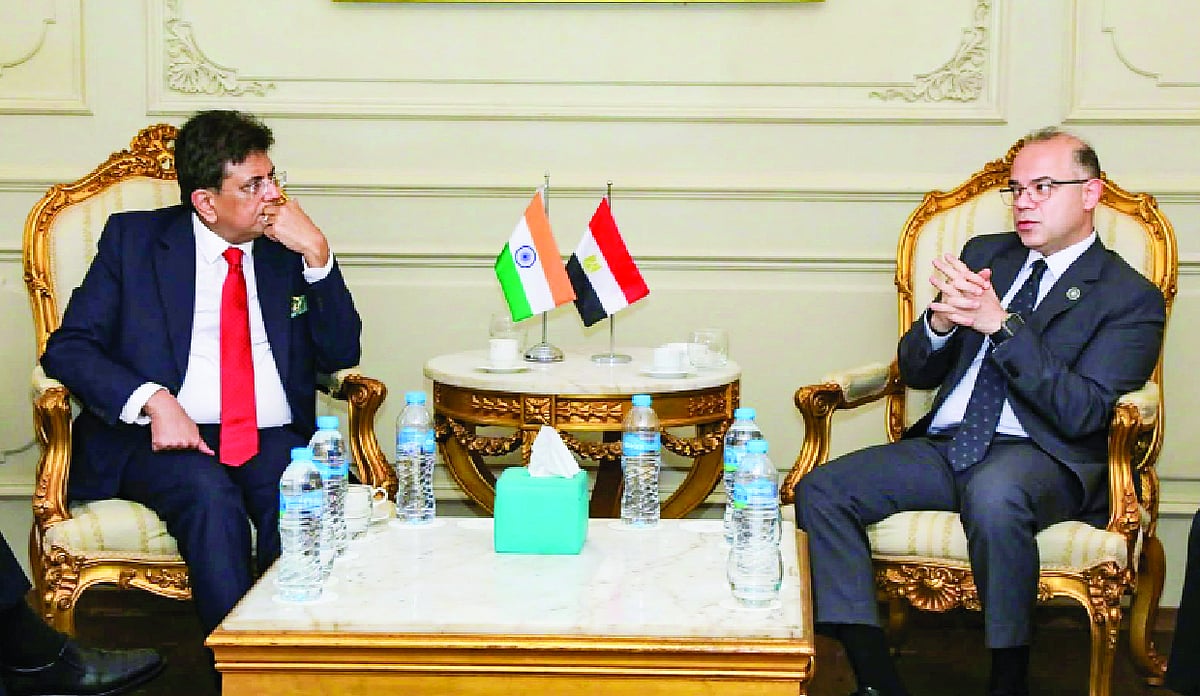
India and Egypt agreed on Sunday to have their officials work toward finalising the terms of reference for a potential bilateral trade agreement, the first formal step in deciding whether the two countries can negotiate a deal.
Commerce and Industry Minister Piyush Goyal spoke at a Joint Trade Committee meeting and said teams led by Petal Dhillon, a Joint Secretary in the Commerce Ministry, will work with the Egyptian side on a fixed timeline. The Egyptian delegation was chaired by Mohamed Farid Saleh, Egypt's Minister of Investments and Foreign Trade.
Terms of reference set the broad outline for formal trade negotiations, so the work ahead is preparatory rather than a signed agreement. Goyal and Saleh have asked officials to examine whether the countries should pursue a preferential trade agreement or a full free trade agreement. Either would aim to give businesses better terms and wider market access.
Bilateral trade currently stands at about USD 6.5 billion, which Goyal called a starting point rather than a target. He said the two sides want to expand trade and investment, and to broaden ties into education and other areas. Both countries' central banks are already working on trade settled in local currencies, and Goyal proposed linking India's UPI payment system with Egyptian payment networks. For businesses, he argued, that could cut transaction costs and make it easier to trade.
Goyal listed several sectors for cooperation, including pharmaceuticals and healthcare, engineering and automobiles, agriculture, digital tools and fintech, and museums. He pointed to Egypt's location at the meeting point of Africa, the Arab world and the Mediterranean, and to the Suez Canal as a logistics advantage. Officials also discussed aligning customs and testing authorities through mutual recognition agreements, which could reduce delays and repeated checks for exporters.
Saleh, for his part, invited Indian investment into Egypt. Whether the talks turn into a trade pact will depend on how quickly the working groups finish the terms of reference and how the negotiations proceed from there. For now, the announcement signals a clear push to deepen economic ties between two large markets.
Read the original report at The Daily Pioneer.