Jitendra Singh: India's space economy to hit $40-45 billion by 2036
The science and technology minister says private firms will drive the jump from about $9 billion today, and wants more corporate money flowing into research.
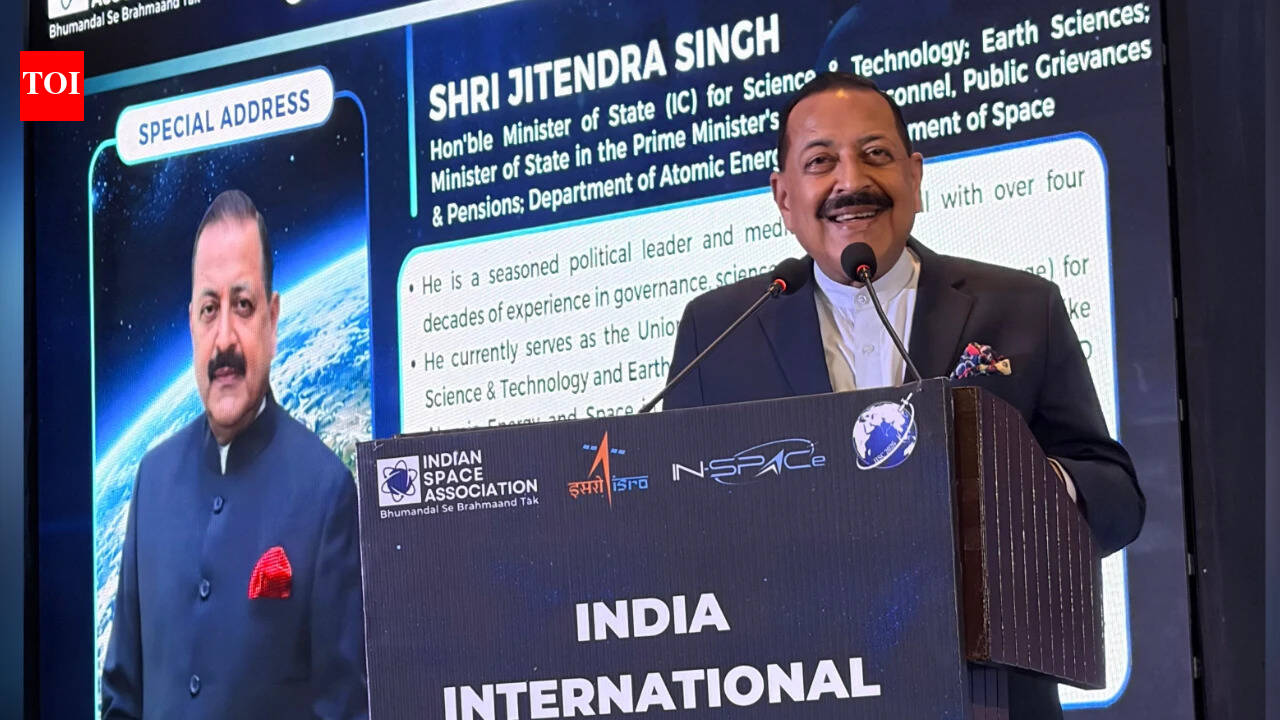
India's space economy could grow from nearly $9 billion now to between $40 billion and $45 billion by 2036, with private companies leading the way, Union minister Jitendra Singh said on Tuesday. He was speaking at the 5th India International Space Conclave 2026 in New Delhi.
Singh pointed to the number of space startups as proof of the shift. A few years ago there were only a handful. Now, he said, there are roughly 400 to 500.
He credited the change to space reforms under Prime Minister Narendra Modi. In his telling, three steps mattered most: setting up New Space India Limited (NSIL), creating the Indian National Space Promotion and Authorisation Centre (IN-SPACe), and opening the sector to private players.
The minister named Skyroot Aerospace as a success story. He cited its first launch vehicle flight, its agreements for multiple missions and its unicorn status. He also mentioned Agnikul and other firms working on home-grown propulsion, rocket engines, earth-observation tools and satellite imaging.
The other message was about money. Singh urged companies to put more of their Corporate Social Responsibility (CSR) funds into science and to build a stronger habit of giving to research. "What you spend on research is also a worship," he said.
In the question-and-answer session, he said India should keep building its own capabilities, based on indigenous sources, technology and projects, while staying open to partnerships that benefit both sides. He admitted that domestic private investment was slow to start. "So we need to scale them up," he said, asking industry to take a bigger role in bringing capital into the sector.
Why it matters: a target of $40-45 billion would mean a roughly fourfold or fivefold expansion in about a decade. The minister's own remarks show the gap to close is not only about rockets and satellites, but about getting more private and corporate capital behind them.