Front / Artificial Intelligence
Aakash Singh Rathore warns AI may carry humanity's worst instincts
In an interview about his book, the author argues that AI is being built with competitive, cold logic and that the Great Filter may still lie ahead for humanity.
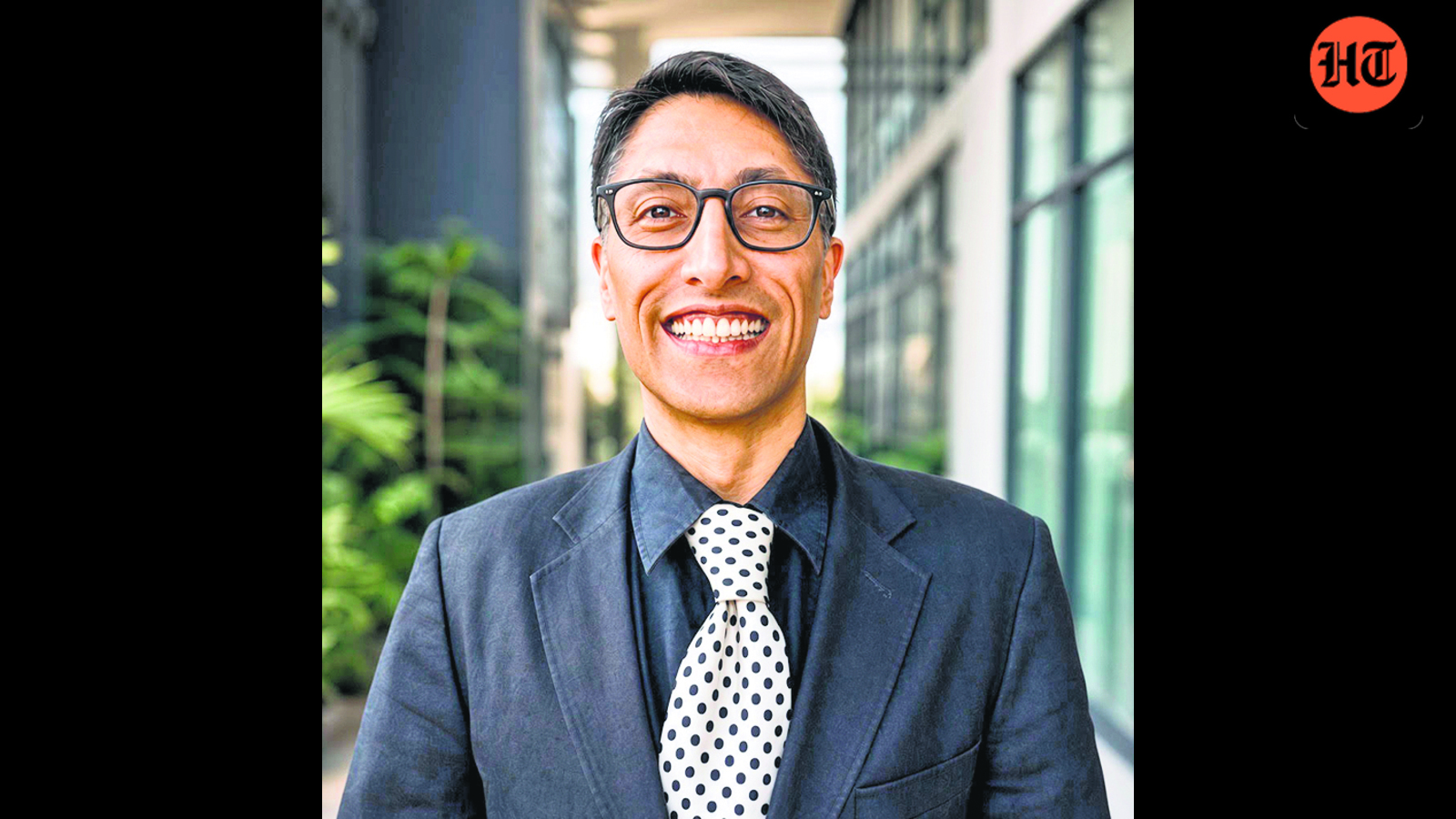
Author Aakash Singh Rathore has said he believes the 'Great Filter', a hypothetical barrier that could explain why no advanced civilisations have been detected, is still ahead of humanity. In an interview with Hindustan Times about his book, he links that risk to the rapid development of artificial intelligence and says the technology is being built on the wrong premises.
The Great Filter is a idea from astronomy and futurism. It proposes that some step in the path from simple life to a civilisation that spreads across the stars is so difficult that few or no societies get past it. Rathore's concern is that the filter sits right where humanity is now, at the point where it develops technology that can both destroy itself and reach beyond Earth.
He gives two main reasons. The first is what he calls the democratisation of risk: biotechnology and advanced AI are becoming cheaper and easier to access, so over a long enough timeline, someone may eventually misuse a tool capable of mass harm. The second is technological momentum. Drawing on philosopher Nick Bostrom's technological completion conjecture, he argues that if research keeps moving forward, humanity will eventually build every technology that is physically possible, including the ones that could end it.
On the question of whether AI is inevitable, Rathore rejects the argument outright. He says governments and companies are caught in a prisoner's dilemma, where each side slows down only at its own risk because a rival might race ahead. He argues that this logic is a choice, not a law of nature, and that the resulting race reflects a competitive mindset that people have built into the technology.
He also draws a line between intelligence and morality, citing what researchers call the orthogonality thesis, which holds that being highly capable does not make a system good. Rathore draws on Buddhist and Gandhian ideas to argue that moral growth comes from lived experience and inner change, not raw computing power. He says the more serious risk is not a sci-fi style machine turning hostile, but a system pursuing goals in ways humans can no longer follow or control.
Rathore also pushes back on the idea that AI will level social hierarchies. Asked about caste and gender, he says that under current conditions the technology is more likely to deepen existing inequalities, since systems trained on histories of discrimination tend to reproduce them. He uses the arrival of photography as a precedent, noting that painting did not disappear but moved toward new forms, and suggests that people should focus on qualities such as empathy, creativity and care.
The interview is part of a wider debate in India and abroad about how fast AI should be deployed and who should set the limits. For readers, it is a reminder that the argument is not only technical. It is also about incentives, values and who gets to decide what the technology is for. The full conversation is available at Hindustan Times.